The modern workplace is evolving rapidly, shaped by two powerful forces: Artificial Intelligence (AI) and neurodiversity. A groundbreaking new survey from Understood.org, conducted in partnership with The Harris Poll, delves into this intersection, revealing both immense opportunities and stubborn challenges.
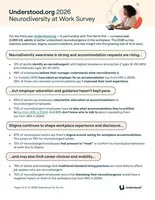
The "Neurodiversity at Work" survey, now in its third year, highlights a critical truth: while nearly one in three U.S. adults (31%) identify as neurodivergent, workplaces are struggling to keep pace with their needs. However, there's a beacon of hope: a significant majority of U.S. adults (61%) believe AI can help level the playing field for individuals who learn and think differently.
"Our third annual 'Neurodiversity at Work' survey highlights a critical point: AI is a powerful force, giving neurodivergent employees more confidence to apply for roles and disclose their differences. But this positive trend is undermined by persistent stigma, despite strong awareness of neurodiversity," said Nathan Friedman, co-president and chief marketing officer of Understood.org. "With nearly half of Gen Z identifying as neurodivergent, the opportunity is urgent: Organizations must adopt neuroinclusive practices so all employees can truly thrive."
AI: A Game-Changer for Neurodivergent Employees
For many neurodivergent workers, tasks like interviewing, administrative work, and communication can present added challenges. The survey suggests AI can help shift that dynamic, offering significant empowerment:
- A striking four in five neurodivergent employees (78%) report using AI tools at work, a notable difference compared to 59% of neurotypical employees.
- Over half of neurodivergent employees (56%) — compared to 45% of neurotypical employees — say the availability of AI tools has made them more confident applying for high-level roles they previously avoided due to administrative or organizational requirements.
- Nearly three in five neurodivergent employees (57%) state they would be more likely to disclose their neurodivergence if their employer provided specialized AI tools (e.g., "co-pilots," AI assistants) as a standard accommodation.
The Persistent Reality: Stigma Undermines Awareness
Despite growing awareness, the battle against workplace stigma is far from over. The survey reveals a concerning gap between perceived understanding and actual experience:
- Most employed adults believe their manager understands what neurodiversity is (69%) and say their workplace is accessible for neurodivergent employees (73%).
- Yet, a significant 70% of neurodivergent employees worry that disclosing their neurodivergence could negatively impact them in the workplace (up from 59% in 2024) — reinforcing stigma as a major challenge.
- Over four in five adults (85%) say employers need better education on workplace accommodations for neurodivergent employees.
- Nearly seven in ten neurotypical adults (67%) — and about eight in ten neurodivergent adults (79%) — say there's stigma around asking for workplace accommodations, similar to prior years.
- Alarmingly, 70% of neurodivergent employees say they have no idea what accommodations they're entitled to (up from 60% in 2024), and 60% don't know who to talk to at work to request workplace accommodations (up from 49% in 2024).
Neurodivergent Women Face Unique Barriers
The survey also shines a light on the distinct challenges encountered by neurodivergent women in the workplace, who report higher levels of pressure, constraint, and difficulty accessing support compared to their peers:
- Three in four neurodivergent women (75%) feel the pressure to "mask" or conform to neurotypical behaviors at work due to stigma (vs. 69% of neurodivergent men).
- Compared to neurotypical women, neurodivergent women are significantly more afraid to leave their job due to concerns about finding another that will embrace or support neurodivergent employees (68% vs. 37%).
- A concerning 22% of neurodivergent women who requested accommodations report being denied (vs. 7% of neurotypical women).
Building a Neuroinclusive Future of Work
As neurodivergence becomes more visible, employers have a growing opportunity — and responsibility — to close gaps in understanding, access, and support. Embracing neuroinclusivity isn't just about fairness; it's about building stronger, more innovative, and resilient workplaces.
"Employers can meet this new workforce where they are," Friedman added. "The organizations that act now won't just attract top talent, they'll create more resilient and equitable workplaces for everyone."
Understood.org is actively contributing to this shift through several valuable resources, including:
- The Minds at Work podcast, featuring leaders embracing neurodiversity in business.
- A Neurodiversity Guide to Effective Work, co-authored with Google Workspace.
- Partnership opportunities to help organizations design neuroinclusive workplace strategies.
For more insights and resources on workplace support, visit understood.org/workplace.
About the Survey Methodology
This comprehensive survey was conducted online within the United States by The Harris Poll on behalf of Understood.org from March 19–23, 2026. It included 2,073 U.S. adults ages 18+, of whom 614 identify as being neurodivergent. The sampling precision for this study ensures the full sample data is accurate to within +/- 2.5 percentage points using a 95% confidence level.
About Understood.org
Understood is a leading nonprofit focused on shaping the world for difference. They raise awareness of the challenges, skills, and strengths of people who learn and think differently. Their resources help people navigate challenges, gain confidence, and find support and community so they can thrive. Together, they aim to build a world where everyone can reach their full potential. Understood is a 501(c)(3) organization headquartered in New York. For more information, to donate, or to partner, visit u.org/media and follow them @UnderstoodOrg.