The global order is under unprecedented strain, with disparate events across continents pointing to a singular direction: a world in flux. In this exclusive Fair Observer analysis, Editor-in-Chief Atul Singh and FOI Senior Partner Glenn Carle, a retired CIA officer and geopolitical risk advisor, meticulously survey the key developments of April 2026. Their insights aim to "sift signal from noise," providing clarity on a moment where American primacy faces new challenges and nations are recalibrating their positions.
Watch the full "Global Lightning Roundup of April 2026" episode on Fair Observer's YouTube channel.
A comprehensive look at the world's most pressing issues in April 2026.
Meet the Analysts
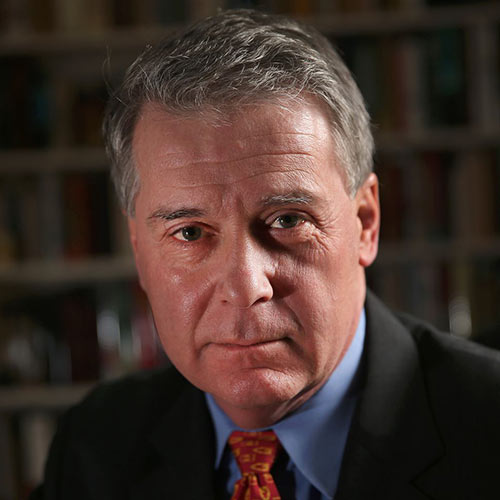
Glenn Carle: A retired CIA officer and Senior Partner at FOI, Glenn advises companies, governments, and organizations on geopolitical risk, offering unparalleled insights into global dynamics.
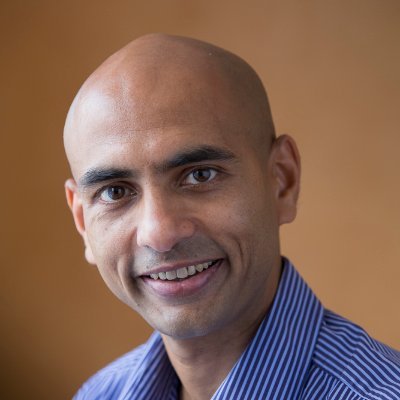
Atul Singh: Editor-in-Chief of Fair Observer, Atul provides incisive analysis on international affairs, guiding discussions on the complex interplay of global forces.
A Glimmer of Hope: The Artemis II Mission
Atul and Glenn commence their analysis with a rare moment of optimism: the successful Artemis II mission. This historic achievement saw astronauts orbit the moon and return, marking humanity's first venture beyond Earth's orbit in over five decades. Glenn views this not merely as symbolic progress but as an expansion of "the range of human capabilities," promising technological advancements and economic boosts for decades to come.
Space Exploration: State vs. Private Sector
However, the rosy outlook is tempered by concerns about sustainability. Glenn highlights the potential financial unsustainability of NASA's current architecture, predicting a future where private-sector entities like SpaceX's Starship will likely dominate space exploration. This shift from state-led to hybrid or commercial models in space mirrors broader global economic trends.
Israel, Europe, and the Shifting Sands of Geopolitics
The discussion quickly shifts to more somber developments, focusing on Israel. April 2026 saw the passage of a controversial law effectively mandating a death sentence for Palestinians convicted of deadly terrorist acts by military courts, without appeal. Israeli civil and human rights groups decry this as racist, noting its potential discriminatory application against Israeli Arabs, signaling a move towards second-class citizenship.
The Rise of a 'Spartan State'
Further, Israel's parliament approved a record $271 billion budget, underscoring significant defense spending that suggests the country is solidifying its position as an even more formidable "Spartan state" and the dominant military power in the region, particularly amidst the ongoing US-Israel-Iran conflict.
Eroding International Support and European Recalibration
Despite its regional dominance, Israel is experiencing a decline in international support. Italian Prime Minister Giorgia Meloni, previously aligned with Israel and the US, suspended defense cooperation due to mounting domestic opposition to the conflict. This led to Italy denying US aircraft access to bases in Sicily. Similarly, Spanish Prime Minister Pedro Sánchez vocalized strong opposition to the war, drawing American ire.
Spain's Unconventional Immigration Policy
In a bold move, Sánchez's government offered residency to 500,000 undocumented migrants, an unconventional policy in an era where most European nations are tightening immigration controls. This highlights a deeper dilemma across advanced economies: balancing demographic decline and economic growth with social cohesion and the political backlash that fuels far-right movements. The experts agree that immigration-triggered tensions in Europe are structural and here to stay.
Britain's Deepening Crisis of Governance
British Prime Minister Sir Keir Starmer found himself embroiled in controversy following the appointment of Lord Peter Mandelson as ambassador to America. Mandelson, known as "the Dark Lord" for his influential yet controversial past, faced scrutiny over his associations with figures in China, Russia, and Jeffrey Epstein.
Political Instability and Eroding Confidence
The fallout led to the sacking of Sir Oliver Robbins, who claimed pressure from Starmer's office to expedite Mandelson's security clearances. Talk of a no-confidence vote against Starmer is now rampant, reflecting an eroding confidence not just in the government but in the UK itself. This political instability exacerbates economic fragility, with inflation, rising debt, and bond yields pushing the nation towards a crisis.
Defense Concerns and 'Corrosive Complacency'
Lord George Robertson, former NATO secretary-general, warned of Britain's "peril" due to the Starmer government's "corrosive complacency" in defense spending, blaming the Treasury for failing to fund crucial recommendations.
The Global Surge of Antisemitism
April 2026 witnessed alarming warnings from Britain's chief rabbi, Ephraim Mirvis, about a "sustained campaign of violence" against Jews. This mirrors a dramatic, record-high surge in antisemitism globally, intensified by the October 7, 2023, terror attacks on Israel and the subsequent conflict in Gaza. Data reveals a nearly 350% increase in US incidents over the past five years, with over 9,300 incidents reported in 2024 alone. Reports like the American Jewish Committee’s The State of Antisemitism in America 2025 highlight a profound feeling of insecurity among American Jews.
Sources of Antisemitism in Europe
In Europe, antisemitism emanates from two primary sources: the traditional far-right, which has historically targeted Jews, and a segment of recent Muslim immigrants. These immigrants, often identifying with the Palestinian cause and influenced by radical mosques, may harbor prejudices against Jews, believing them to be oppressors in an "apartheid state." The legacy of Saudi-funded Wahhabi Islam, which promoted antisemitism and jihadism for decades, continues to fuel these dangerous sentiments.
Regional Spotlights: India, Canada, Japan, and Hungary
India: A Government Defeat and Resurfacing Faultlines
In India, the Narendra Modi government suffered a rare parliamentary defeat over a bill to increase lower house seats from 543 to 850. This move, which would have weakened southern states, was voted down, bringing language and regional faultlines back to the forefront of Indian politics, alongside religion.
Canada: Carney's Majority and a New Sovereign Wealth Fund
Canadian Prime Minister Mark Carney's Liberal Party secured a small majority after by-elections, strengthening his position. His government launched the "Canada Strong Fund," a $25 billion (CAD) sovereign wealth fund to invest in energy, infrastructure, mining, agriculture, and technology. This unprecedented move aims to boost Canada's economy against US tariff threats. Critically, the fund allows direct investment from Canadians, a novel approach to reduce reliance on Wall Street and Washington, signaling Canada's step towards greater self-reliance.
Japan: Emerging as an Independent Strategic Actor
Japanese Prime Minister Takaichi Sanae announced a relaxation of weapons export restrictions, fostering international defense trade. This follows her assertive stance on Taiwan, which sparked a row with China. Glenn views this as Japan's emergence as a fully independent strategic actor, moving away from sole reliance on the American security umbrella – a trend mirrored by Canada.
Hungary: Orbán's Defeat and a New Political Landscape
In Hungary, Péter Magyar's centrist Tisza party achieved a landslide victory, ending Viktor Orbán's 16-year rule. Magyar, campaigning against corruption and for the rule of law, was bolstered by leaked communications linking Orbán's government to Moscow and the failed endorsement by US Vice President JD Vance. Glenn characterizes Orbán's regime as "authoritarian and corrupt," aligned with Moscow, while Atul notes the grassroots nature of Magyar's win and Orbán's swift concession. Magyar's priority to improve EU relations signals a completely new political landscape for Hungary and Europe, likely unlocking previously frozen EU funds.
This comprehensive analysis by Glenn Carle and Atul Singh offers crucial perspectives on the complexities shaping the global stage in April 2026, highlighting the intricate connections between seemingly disparate events.