“Raw materials are exhaustible, but human knowledge grows with use. That is the secret of industrial diversification, job creation and prosperity.” — Professor Calestous Juma, Harvard Kennedy School
Ghana is on the cusp of a scientific and economic transformation, thanks to the impactful conclusion of the £1.9 million UK-Africa Sankore Project. Unlike many initiatives that end with reports, Sankore has delivered tangible results: Ghana's first fully operational National Research Fund (GNRF) and a robust innovation policy architecture. This success story, however, brings into sharp focus the nation's ongoing struggle to convert brilliant local ideas into scalable industrial impact.
From Policy to Practice: Unlocking Ghana's Research Potential
For years, Ghana has crafted numerous science, technology, and innovation (STI) policies, yet implementation, particularly in financing research and linking it to industry, remained a hurdle. The National Research Fund, though legally established in 2020, lay dormant. The Sankore Project, funded by the UK’s Foreign, Commonwealth and Development Office and implemented by UNESCO in partnership with Ghana and Nigeria, intervened not to create a new vision, but to activate an existing one.
In a swift 15-month period, Sankore successfully operationalized the Ghana National Research Fund, bolstered commercialization pathways, and established a West Africa-wide helpdesk for researchers and government institutions. This rapid progress is a testament to the project's execution-focused design, marking a meaningful return on a short-term intervention.
The GNRF, established under Act 1056 in 2020 with an initial US$50 million pledge, is now moving from concept to execution. A 13-member governing board was inaugurated in 2025, with a formal launch confirmed for June 2026 under the UK Ghana Science, Technology and Innovation Partnership. The economic stakes are significant; Board Chairman Professor Eric Danquah notes that Ghana's annual US$3 billion food import bill could be drastically reduced through targeted domestic research investment. Yet, national R&D spending hovers around 0.3% of GDP, far below the African Union’s 1% benchmark.
Bridging the Gap: Innovation Without Scale
Despite funding constraints, Ghana's innovation ecosystem is producing practical, impactful solutions:
- Farmsense: Developed by KNUST researchers and Sesi Technologies with support from Innovate UK and Manchester Metropolitan University, Farmsense is projected to benefit over 20,000 smallholder farmers, with ambitious plans to reach one million by 2030.
- R-Leaf®: A patented agrochemical technology from Crop Intellect Limited (UK), this innovation uses a photocatalyst spray to convert atmospheric nitrogen oxides into absorbable nitrate for crops, offering a novel approach to improving soil fertility.
These examples showcase a system capable of generating ideas with real economic value. Ghana's startup ecosystem raised $127 million in 2024, a 95% increase year-on-year, driven primarily by agritech, fintech, and healthtech. However, a critical question persists: can these innovations transcend pilot stages to achieve full-scale production and commercialization?
The Stalled Electric Vehicle: A Stark Reminder
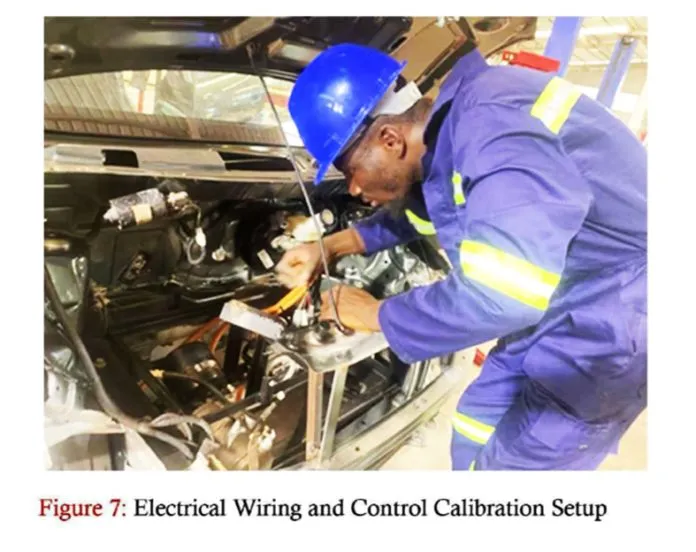
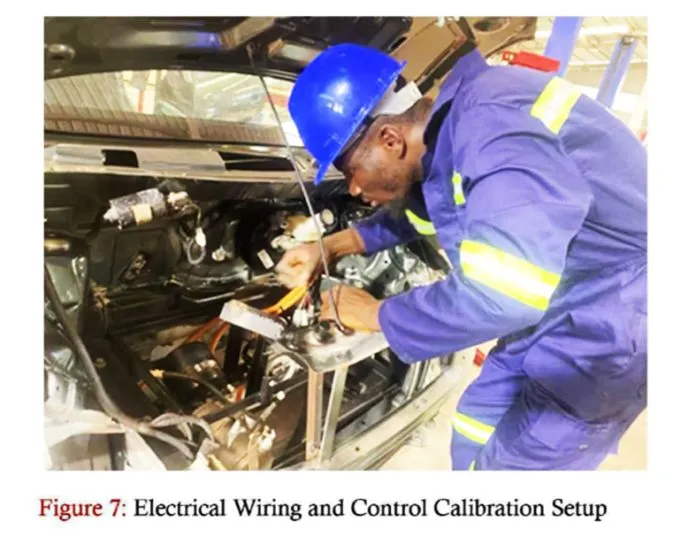
The challenge of scaling innovation is powerfully illustrated by a locally engineered electric vehicle developed by students at Kumasi Technical University (KsTU).
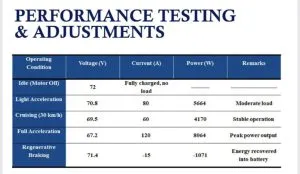
This fully functional prototype, featuring regenerative charging adapted for Ghana’s inconsistent power infrastructure, remains confined to a university lab. Professor Prince Owusu Ansah, the chartered engineer leading the project, expresses profound frustration:
“Having produced this vehicle, nobody has called us. We are waiting, hoping government or the private sector will come in. In a year or two, this vehicle may just sit there, and we will lose motivation.”
The barriers are not primarily technical. Costly and slow certification processes, coupled with uncertain patent protection pathways, hinder progress. At an estimated unit cost of 70,000 cedis, the vehicle cannot achieve scale without external investment or policy-backed demand.
The Cost of Stalled Innovation: Why Action is Critical
Each uncommercialized innovation incurs a significant cost—lost jobs, missed industrial opportunities, and a gradual erosion of confidence among researchers. The KsTU electric vehicle is more than just an idle transport solution; it symbolizes a broader structural gap between invention and industry in Ghana.
Chisom Udemezue, Technology and Innovation Adviser at the FCDO West Africa Research and Innovation Hub, emphasizes that research commercialization is fundamental to economic transformation and requires sustained domestic investment. International models, such as South Korea’s globally competitive research institutions, demonstrate the power of decades of coordinated industrial policy and long-term national strategies that prioritize innovation.
The Road Ahead: Sustaining the Momentum
Ghana now possesses the foundational elements: the Sankore Project has operationalized the National Research Fund, clarified policy direction, and deepened international collaboration. However, policy alone cannot create thriving industries.
The next phase demands decisive execution. Ghana must fully embrace the National Research Fund as a domestic instrument, ensuring predictable financing, streamlining certification processes, and actively connecting researchers with industry and investors. The country has the talent, the strategic direction, and promising early-stage innovations. The crucial factor remains political will to translate these assets into sustained economic outcomes.
Professor Calestous Juma’s insight resonates deeply: knowledge thrives when applied, but diminishes when left fallow. Professor Owusu Ansah and his team are still waiting for that call. If Ghana is committed to building a science-driven economy, it cannot afford to keep them waiting. Sankore has ignited the flame; the responsibility now lies in sustaining it and building a prosperous future.
By Richard Owusu Akyaw
For more news, join The Chronicle Newspaper channel on WhatsApp: https://whatsapp.com/channel/0029VbBSs55E50UqNPvSOm2z