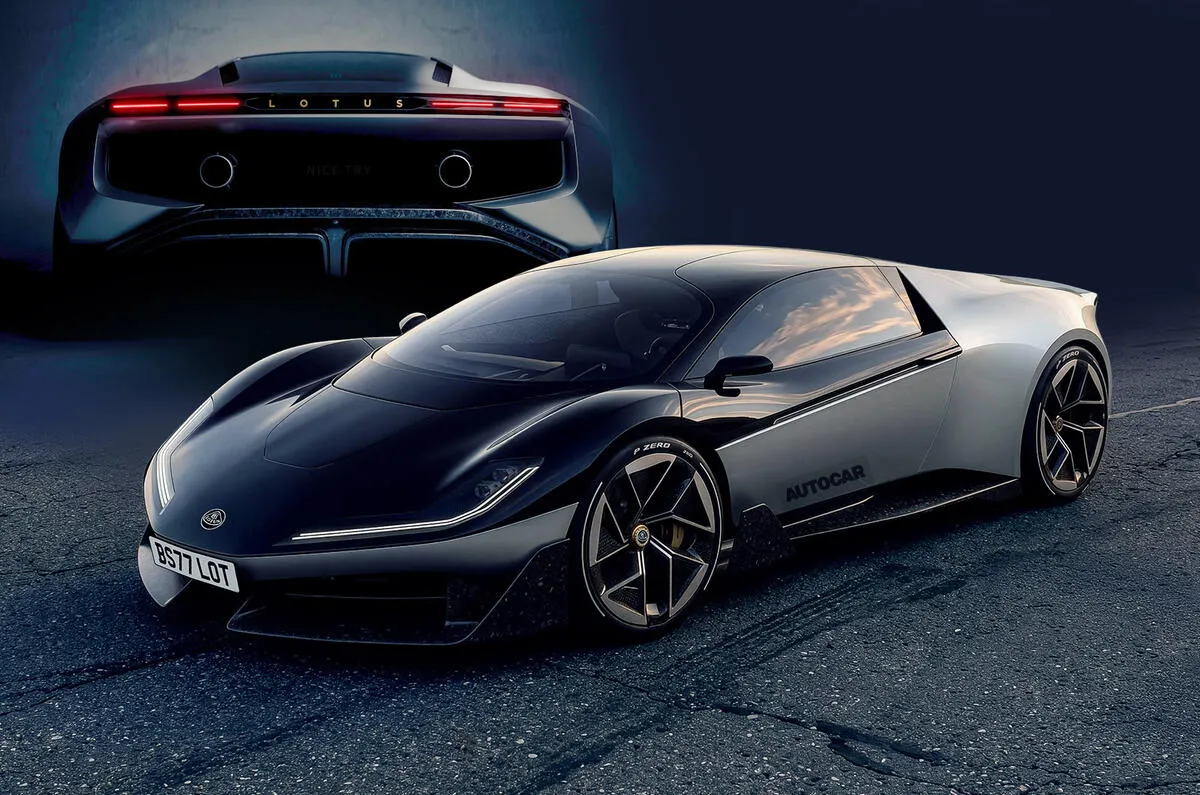
Lotus is set to ignite the supercar world once again, confirming its return to the internal combustion engine (ICE) business in 2028 with a groundbreaking V8-powered hybrid. This bold move signals a strategic pivot away from the company's previous all-electric ambitions, reaffirming Lotus's commitment to exhilarating performance rooted in its legendary heritage.
A V8 Roar Returns: Channeling the Spirit of Esprit
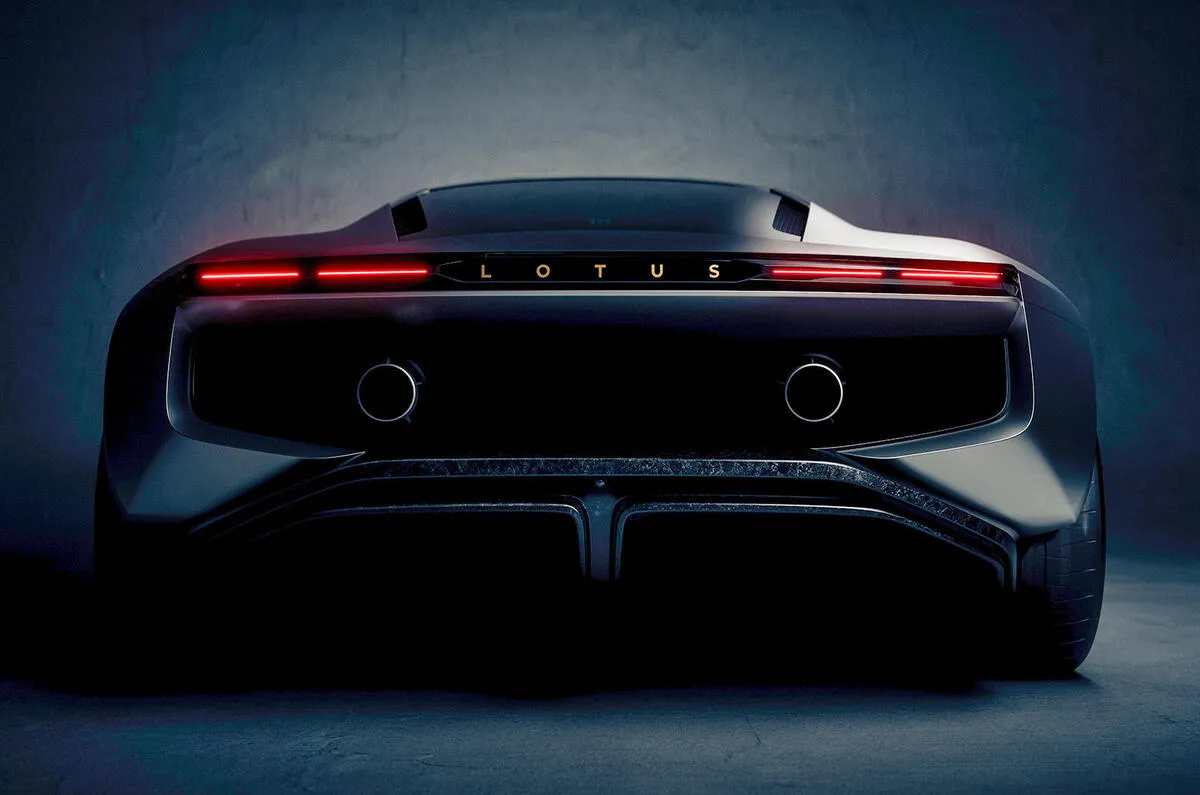
In an exciting announcement, Lotus has released an official rear-end image of the forthcoming supercar. The design clearly draws inspiration from the striking 2024 Theory 1 electric supercar concept, yet with a crucial difference: two massive exhaust pipes proudly hint at the immense power beneath. This new model is poised to evoke the spirit of the iconic Lotus Esprit, a V8 powerhouse last seen in 2004, and will undoubtedly invite comparisons to one of the most celebrated cars in Lotus's storied history.
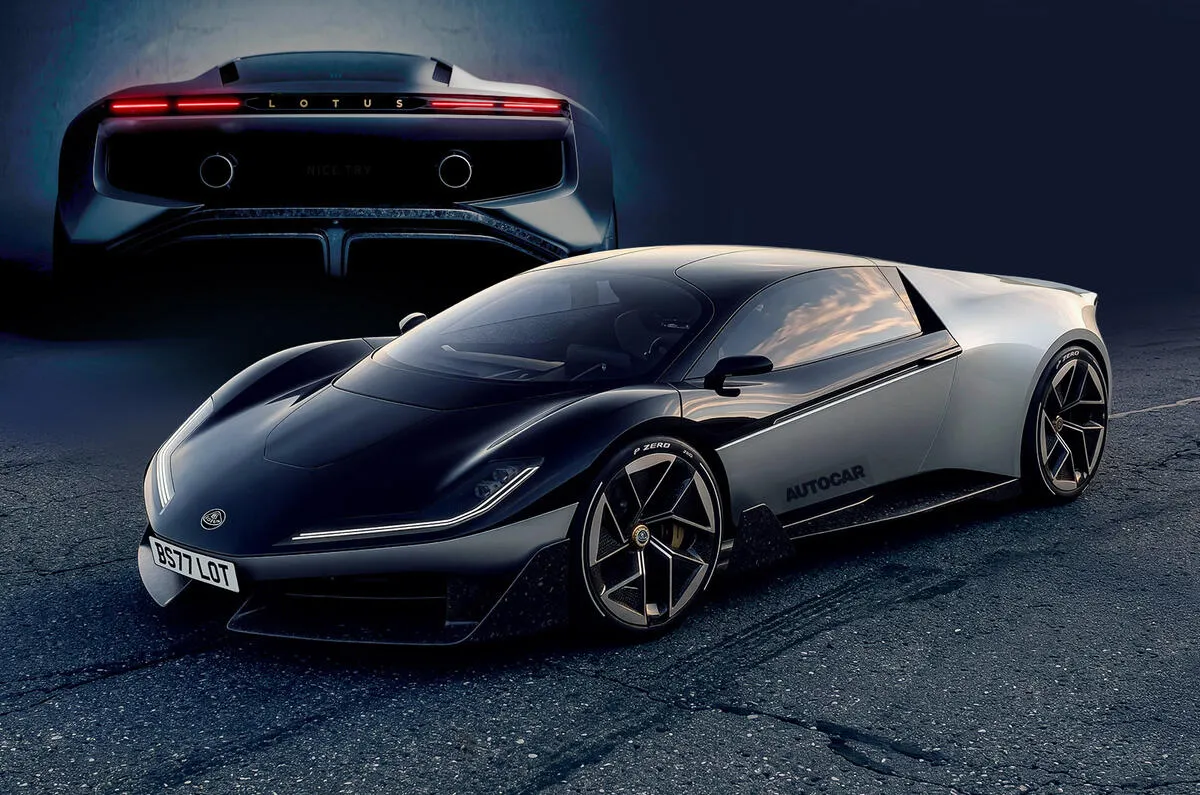
Owned by Geely, Lotus has vowed that this new model will be deeply informed by the 'Lotus of old,' emphasizing a return to the brand's core philosophy of extreme lightweighting. CEO Feng Qingfeng stated, “Lotus was born from the rebellious spirit of [founder] Colin Chapman, and that is not lost today.” This commitment to minimizing weight is precisely why the new supercar will feature a hybrid drivetrain rather than a heavier plug-in hybrid (PHEV) system, a distinction that sets it apart from many contemporary supercar rivals like the Aston Martin Valhalla, Lamborghini Temerario, and Ferrari 296 GTB, which have increasingly adopted PHEV power for its blend of performance and emissions compliance.
Unleashing Raw Power: The Potential Engine Behind the Beast
While Lotus has yet to confirm the specific V8 engine, speculation points towards a formidable unit. The company currently sources a turbo four-cylinder engine from Mercedes-AMG for its Emira sports car, suggesting a potential expansion of this partnership to include AMG's renowned V8. Mercedes-AMG has recently refined its 'M177' 4.0-litre twin-turbocharged engine, featuring a motorsport-derived flat-plane crank for a new generation of high-performance models.
In the refreshed Mercedes S-Class, this V8 delivers 530bhp and 553lb ft of torque. However, Autocar understands that extensive work is underway to push this engine beyond 650bhp and 590lb ft for more performance-focused applications, hinting at a blistering 0-62mph acceleration time comfortably under 4.0 seconds for the new Lotus. Production of this supercar is "likely" to take place in Europe, though a specific location, such as Lotus's long-time home in Hethel, Norfolk, has not been officially confirmed.
Design Philosophy: From Coventry with Vision
The new supercar's design originated at Lotus’s design centre in Coventry, the same birthplace as the Theory 1 concept. If the new model carries over more than just the aesthetic cues of that electric concept, it could potentially feature a McLaren F1-style three-seat arrangement. The 4490mm-long Theory 1 was envisioned as an "approachable supercar," distinct from a hypercar like the wild 2011bhp Evija. Its design emphasized weight reduction through innovations like a carbonfibre tub, with Lotus previously stating that 85% of the technology showcased in the concept was production-ready.
Strategic Evolution: Lotus's Mixed Powertrain Future
The announcement of the V8 hybrid supercar is part of a broader shift in Lotus’s corporate strategy towards a mixed powertrain approach, moving away from its earlier commitment to go fully electric by 2028. This new supercar, codenamed Type 135, originally referred to the now-cancelled electric replacement for the Emira.
In the coming weeks, Lotus is also poised to unveil an update to the ICE Emira, promising to make it "the most powerful and lightest Emira built." This development casts doubt on previous speculations that the Emira might receive PHEV power as part of a facelift to comply with Euro 7 emissions regulations in 2027, given the emphasis on it being "lighter" than the current 1.5-tonne pure-ICE model.
Further demonstrating this strategic pivot, Lotus aims to increase PHEV sales to 60% of its global total "in the short term." This push includes ramping up production of the new Eletre X PHEV SUV, which is already reaching customers in China and is slated for arrival in Europe in the last quarter of this year, followed by the UK in 2027.
This comprehensive strategy underscores Lotus's agility and determination to cater to diverse market demands while staying true to its performance heritage.