The Ukrainian Catalyst: Rapid Innovation Under Fire
In the high-stakes world of modern warfare, rapid innovation is paramount. A Dutch radar company, Robin Radar, is at the forefront of this evolution, asserting that its advanced counter-drone technology, now deployed to protect US allies from Iranian drone attacks in the Middle East, owes its current capabilities to the crucible of the Ukrainian battlefield.
Since 2023, Robin Radar has had its drone detection radar systems operating in Ukraine, gaining invaluable, real-time experience against Russia's relentless mass drone bombardments. This hands-on engagement provided an unparalleled environment for testing and refining their technology.
From Shaheds to Iranian Drones: Adapting to Evolving Threats
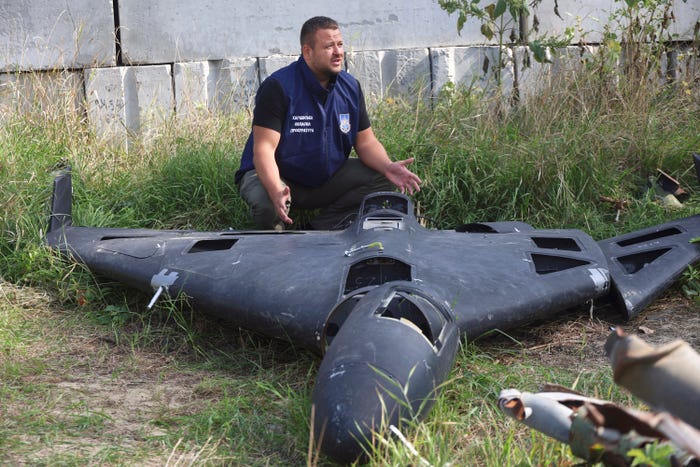
The experience garnered from combating Russia's Shahed-style drones in Ukraine proved to be a critical differentiator. As Russia escalated its attacks, demanding systems capable of detecting larger attack drones at longer ranges, Robin Radar rapidly upgraded its radars. This proactive development, driven by urgent operational needs, allowed the company to significantly enhance its detection capabilities.
Battlefield Feedback: The Engine of Development
Kristian Brost, General Manager for Robin Radar in the US, emphasized the pivotal role of Ukrainian feedback. Commanders on the ground regularly provided insights into operational requirements, while a dedicated task force meticulously collected battlefield data. This direct, continuous loop of information was instrumental in refining the systems, pushing the boundaries of what was previously possible in drone detection.
“Just the data we’ve gotten from Ukraine has been very important for us,” Brost stated, highlighting how this invaluable data directly influences the company's product development and upgrade cycles.
The Global Impact: Securing the Middle East and Beyond
The lessons learned in Ukraine have found immediate and critical application. Robin Radar’s flagship IRIS radar is now strategically stationed in multiple countries across the Middle East, where the threat of Iranian drones has intensified.
Iran's Tactics Mirror Russia's: A Global Wake-Up Call
Siete Hamminga, Robin Radar’s CEO, observed that Iran is “really following exactly the same patterns” as Russia in Ukraine, employing Shahed drones and domestically produced versions. This parallel underscores the universal applicability of the counter-drone strategies developed in Eastern Europe. Hamminga called it “another wake-up call for Western society” to be fully prepared for the realities of modern drone warfare.
The recent surge in Iranian missile and drone attacks across the region has directly fueled interest and demand for Robin Radar’s solutions. The company has rapidly delivered IRIS counter-UAS radars to the Gulf region within weeks of order, and is actively expanding manufacturing to meet the growing need. While already active in Jordan, the broader conflict has created significant new traction with other nations.
Increasing Demand for Proven Counter-UAS Solutions
Robin Radar's influence also extends to the US, where it partners with the Department of Homeland Security for counter-drone protection, including for events like the World Cup. Brost attributes this US presence directly to their work in Ukraine: “If it wasn’t for Ukraine and all the work we did there, we probably wouldn’t have the products that we do have in North America.”
Ukraine: The Indispensable Proving Ground for Modern Warfare
The experience of Robin Radar is not unique. Western defense companies are increasingly seeking a presence in Ukraine, recognizing it as an unparalleled testing ground for military technology. This battlefield-proven status is deemed essential for developing weaponry capable of operating effectively in large-scale, rapidly evolving modern conflicts.
Why Western Defense Firms Flock to Ukraine
Officials and industry leaders alike emphasize the critical importance of this engagement. Luke Pollard, the UK's armed forces minister, famously stated last year that “if you are a drone company and you do not have your kit on the frontline in Ukraine, you might as well give up.” This sentiment highlights the consensus that real-world combat data is irreplaceable for refining and validating defense systems.
Credibility and Purpose: The Tangible Benefits
For companies like Robin Radar, operating in Ukraine has provided a profound “purpose and direction.” Improved products born from this experience have led to larger orders, enabling further investment in talent and innovation. Beyond the technological advancements, the experience grants “credibility in the defense world, a stamp of approval” that is invaluable.
A Call for Readiness: US Vulnerability to Drone Threats
Despite the advancements, Robin Radar’s observations from the battlefield have also raised significant concerns about US readiness for the widespread drone threat.
Underestimating the Threat: A National Security Concern
Brost warned that the US is “probably behind Europe when it comes to implementing” counter-drone defenses, noting that “there’s some, but very little folks defending our homeland.” He expressed deep concern that drones, which do not require sophisticated actors to deploy, could threaten critical targets ranging from stadiums to nuclear facilities. “I’m very worried about that,” he concluded, underscoring the urgent need for enhanced domestic counter-drone capabilities.